
How Does the Torn and Restored Card Trick Work?
A signed card, torn to pieces, restored whole: the duplicate switch and the beginner method.
A spectator signs a playing card, watches it torn into four pieces, then watches those pieces become a whole card again, signature intact. So how does the torn and restored card trick work? The secret is not glue, nor sleight of hand too fast to follow. It is a quiet switch, made at the one moment nobody watches: when the spectator is handed a torn corner to hold.
What Is the Torn and Restored Card Trick?
The torn and restored card is one of the oldest plots in card magic, and one of the most convincing, because destruction feels final. Classically, a card is freely selected and signed. The magician tears off one corner and gives it to the spectator to keep safe. The rest is torn into quarters, wrapped or dropped into the deck, and a moment later it is whole again, except for the missing corner, which the spectator fits into the gap.
That matching corner is the whole trick in miniature. It answers the obvious objection before anyone asks it: if the restored card were a duplicate, the spectator's corner would not fit it. The audience leaves convinced the signed card was destroyed and rebuilt. The reality starts long before the tearing begins.
How Does the Torn and Restored Card Trick Work? The Duplicate Switch
The professional method, described by Paul LePaul in 1959, relies on one small preparation: a duplicate card with one corner already torn off, sitting face down on top of the deck. The spectator selects and signs a card, then tears off one corner, roughly matching the duplicate's tear. While the spectator presses that corner safely into their fist, the magician performs a top change, exchanging the signed card for the duplicate.
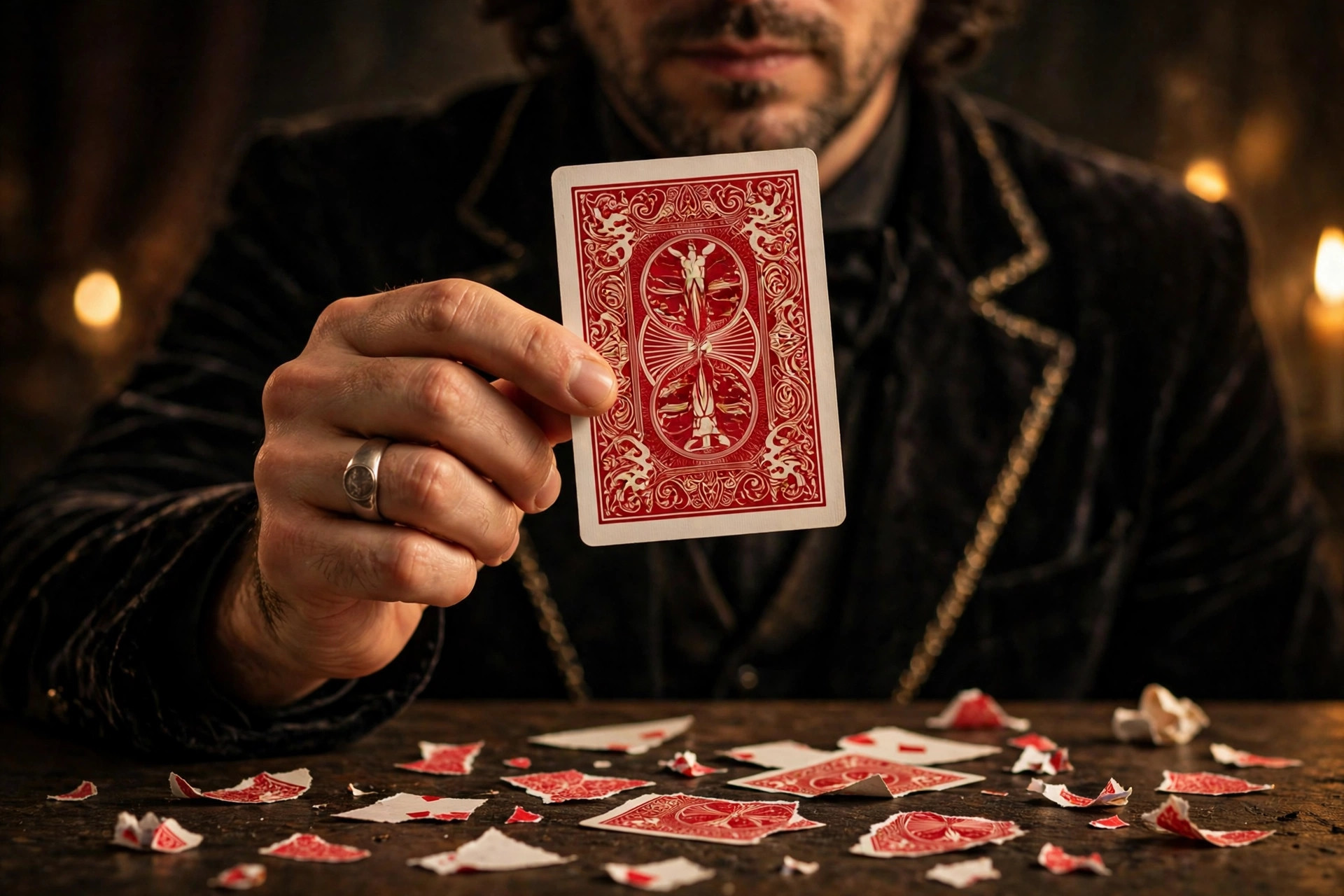
From this point on, everything destroyed is the duplicate, not the signed card. The magician tears the duplicate into pieces in full view and drops them into the deck, while the signed card waits hidden to be revealed. When it appears, it is whole and signed, and missing exactly one corner: the one the spectator is holding. The fit is perfect because the corner really came from that card.
The switch is invisible because of pure psychology. The spectator has just been given an important job, guarding the corner, so their attention is on their own fist, not the magician's hands. Magicians call this relaxed attention. It powers the most famous signed-card routine of all, the ambitious card routine, where the audience is certain the signed card is in the middle of the deck while it never left the top.
Torn and Restored Card Trick Tutorial: The Beginner Method
Beginners need no duplicate switch. The beginner method uses a single card and fake tears. Before performing, tear a small piece off an indifferent card of the same suit and hide it behind your performance card. Then fold that card in half, unfold it, and fold it again lengthwise, explaining that folding makes it easier to tear.
Now the folding does the deception for you. You appear to rip down the fold line, but you are actually folding a corner behind the card, and you display the hidden torn piece as if it were the piece you just removed. Repeat for each quarter. At the climax, the spectator touches the packet, giving you the misdirection to palm the hidden piece away, and you unfold the card whole. No duplicate, no switch, just folding, timing, and confidence.
Practise before a mirror until folds look like tears; hesitation, never the method, is the giveaway. Performed briskly, with the patter of someone genuinely destroying a card, it looks like a miracle. If you enjoy this kind of close-up deception, our guides to how the 21 card trick works and how the invisible deck trick works use the same principle: a simple structure hidden behind a confident performance.
Why the Signed Corner Makes the Trick Unbeatable
The signed corner is what elevates this trick above other restorations, such as the cut-and-restored rope, because it turns the spectator into the evidence. A duplicate card can be exposed by a sharp-eyed spectator who notices a different back design or shade of white. A corner held in the spectator's own fist cannot be argued with. When it slots into the restored card, the spectator becomes the trick's strongest witness, and will defend the miracle to everyone else in the room.
That is why the trick survives slow-motion phone cameras: the switch happens during human interaction, not a fast hand movement, so there is nothing for a camera to catch. The lesson is worth more than this one trick: the strongest secrets are not hidden in the fingers. They are hidden in the audience's attention, in the second when they are looking at what they are holding instead of what you are doing. Master that second, and a torn card, like a vanished coin in the French drop coin vanish, will fool a room full of people who are certain they were watching closely.
Frequently Asked Questions
Is the torn and restored card trick hard to learn?
The beginner fold-and-fake-tear method can be learned in an afternoon. The professional LePaul version is intermediate and needs practice in the top change first.
Does the torn and restored card trick need a gimmick?
No. The professional version needs only an ordinary deck plus one prepared duplicate, and the beginner version needs only a hidden torn piece.
Can the spectator really sign the card?
Yes. The spectator signs the card and keeps one torn corner. The restored card is the signed card itself, which is why the corner fits perfectly.
Can the torn and restored card trick be done impromptu?
Almost. The professional version needs a duplicate prepared on top of the deck, which takes seconds to set up.
What is the best torn and restored card trick for beginners?
Start with the fold-and-fake-tear method: one card and folding that looks like tearing.
Julian Vance
Head of Sleight Analysis & Magic Historian
Former magic consultant for West End theatrical productions with over 18 years of sleight-of-hand performance experience.
Frequently Asked Questions
Continue Reading
How Does the Ambitious Card Trick Work? (Revealed)
Ever wondered how a signed card keeps rising to the top no matter where it is inserted? The full breakdown of the moves, angles and psychology.
10 Easy Card Tricks for Beginners (No Sleight of Hand)
You do not need years of knuckle-busting sleight of hand to astonish your friends. Ten self-working card tricks you can perform right away.
Loved This Breakdown? Learn to Perform It.
25 Self-Working Card Tricks Anyone Can Do - the ebook that turns you from spectator to magician. No sleight of hand needed.
Get the Ebook - $12